A Prayer for Two Homelands: Reflections on Iqbal’s “Lab Pe Aati Hai Dua”


There are poems that gradually become part of the moral vocabulary of generations. Allama Muhammad Iqbal’s celebrated poem “Bachche Ki Dua”—popularly remembered by its opening words, “Lab pe aati hai dua ban ke tamanna meri”—belongs to the latter category. For generations of children in South Asia, the poem has been more than something memorized in school. It has been a prayer, an aspiration, and an introduction to the idea that a meaningful life is not measured merely by what we acquire for ourselves but by what we become for others. Today, when I reflect upon Iqbal’s prayer, I find within its words through which I can express my own prayer for two countries that have shaped my life: the country of my birth and the country I adopted as my home. One gave me my earliest memories, language, culture, and historical inheritance. The other gave me a home in which to live, work, participate, and contribute. I do not believe gratitude toward one requires ingratitude toward the other. The human heart is large enough to pray for both.
The Desire to Become a Source of Light
Iqbal begins with a child's innocent desire that life should become like a candle—a source of illumination. The metaphor is simple, but its meaning is profound. A candle does not ask who deserves its light. It illuminates everyone around it. It consumes itself as it makes darkness disappear. Iqbal therefore teaches the child that the purpose of life is not merely personal advancement. Knowledge, wealth, education, influence, and opportunity acquire their highest meaning when they illuminate the lives of others. This is also how I understand patriotism. Love of country should not simply mean waving a flag, repeating slogans, or celebrating national achievements. Genuine patriotism asks a more demanding question:

What light have I brought to the society in which I live?
If my country gave me opportunities, what opportunities have I helped create for others? If I received education, have I helped educate? If I experienced freedom, have I defended the freedom and dignity of others? If society protected my rights, have I spoken for the rights of those whose voices are rarely heard? The candle of Iqbal's prayer therefore becomes a beautiful symbol of citizenship.
A Prayer for the Vulnerable
One of the deepest themes running through Iqbal's prayer is service. The child does not pray merely for personal success. The prayer turns outward toward people who are weak, poor, suffering, or forgotten. That message is desperately relevant to our age. A nation cannot measure its greatness only through military strength, technological achievement, skyscrapers, financial markets, or national wealth. Its moral character is revealed by how it treats those who possess the least power. How does it treat the poor? How does it educate its children? How does it care for its elderly? How does it receive the stranger? How does it protect minorities? How does it respond when people are hungry, homeless, frightened, or excluded? Iqbal's prayer reminds us that compassion is not weakness. Service is not humiliation. To become useful to another human being is one of life's greatest honors.
My Birth Country
When I pray for my birth country, I pray not only for its prosperity but for its moral and intellectual flourishing. The land of our birth occupies a place within us that geography alone cannot explain. It contains the memories of childhood: familiar streets, languages, foods, friendships, teachers, places of worship, family gatherings, celebrations, disappointments, and dreams. Even after one crosses oceans and establishes a new home, something of that first landscape continues to live within the heart. Therefore, I pray that my birth country may prosper. I pray that its children receive an education regardless of their parents' wealth. I pray that no child sleeps hungry. I pray that women live with dignity, security, equality, and opportunity. I pray that religious communities learn to see one another not as enemies but as fellow human beings. I pray that political differences never become excuses for hatred. I pray that knowledge defeats ignorance, justice defeats corruption, compassion defeats cruelty, and hope defeats despair. Above all, I pray that future generations inherit a country better than the one their parents inherited.

My Adopted Country
But life sometimes gives a human being another homeland. My adopted country became the place where another chapter of life unfolded. It provided opportunities, relationships, responsibilities, and experiences that became part of who I am. For this country, too, I pray. I pray that it remains faithful to its highest ideals. I pray that liberty never becomes the privilege of a few but remains the inheritance of everyone. I pray that democracy remains more than elections—that it continues to require responsibility, participation, dialogue, and respect for disagreement. I pray that Americans never allow differences of race, religion, ethnicity, economic status, or political opinion to destroy their recognition of one another's humanity. I pray for the immigrant who arrives carrying little more than hope. I pray for the worker struggling to support a family. I pray for the child searching for opportunity. I pray for those who feel forgotten by institutions and unheard by political leaders. And I pray that America's extraordinary power may always be accompanied by wisdom, restraint, justice, and compassion.
Two Countries, One Human Responsibility
Some may wonder whether it is possible to love two countries. I believe it is. Love is not necessarily diminished when it is shared. A person can love one's parents and one's children without measuring which love is greater. In a similar way, an immigrant can carry gratitude toward the land that formed him and loyalty toward the land that welcomed him. The relationship is not one of competition but of responsibility. My birth country gave me roots. My adopted country gave those roots another soil in which to grow. One gave me memories that cannot be replaced. The other gave me experiences that have become memories in their own right. Therefore, when I pray, I do not ask God to bless one people at the expense of another. I pray for both. Indeed, I pray for something larger still.
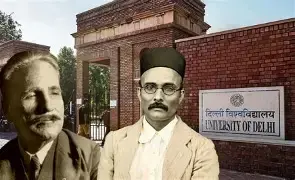
Beyond National Boundaries
Iqbal's candle ultimately cannot be confined within national borders. Light has no nationality. Compassion requires no passport. Hunger has no religion. A child's tears have no ethnicity. Human dignity does not change when we cross a border. The deepest lesson I draw from “Lab pe aati hai dua” is therefore that patriotism must eventually lead us toward humanity rather than away from it. I can love the country of my birth without hating another country. I can love my adopted country without forgetting where I came from. I can celebrate the achievements of my people while acknowledging their failures. I can criticize injustice precisely because I care about the society in which it occurs. True patriotism should make us better human beings, not narrower ones.
The Prayer I Carry Today
As I grow older, Iqbal's child's prayer acquires a different meaning. The child asks what kind of person he hopes to become. Age forces us to ask another question: What kind of world are we leaving behind? Have we increased light or darkness? Have we reconciled people or divided them? Have we comforted anyone? Have we educated anyone? Have we defended someone who was powerless? Have we left our neighborhood, our country, and our world slightly better than we found them? These questions transform Iqbal's poem from a childhood recitation into a lifelong examination of conscience. And so, I make Iqbal's aspiration my own prayer. May I become a source of light rather than darkness. May knowledge overcome ignorance. May generosity overcome selfishness. May dialogue overcome hatred. May justice overcome oppression. May those who have been forgotten be remembered. May children everywhere inherit societies in which their dreams are not determined by their parents' poverty, race, religion, caste, ethnicity, or place of birth. I pray for the country where my life's journey began. I pray for the country that became my home. I pray for the people of both lands—the prosperous and the struggling, the powerful and the powerless, those with whom I agree and those with whom I disagree. And beyond them, I pray for humanity. For perhaps the most beautiful way to understand Iqbal's candle is this: A candle does not choose whom it will illuminate. It simply gives light. May our lives do the same. May our love of country become service to people. May our gratitude become responsibility. May our differences become opportunities for understanding. And may the prayer that once came to our lips as children become, in the evening of life, the testimony of how we actually lived.


Comments