Abdul El-Sayed’s Victory Speech: A New Voice in America, But Can It Unite the Nation?

By Dr. Aslam Abdullah
Abdul El-Sayed’s victory speech was more than a celebration of an electoral triumph in Michigan. It was a declaration of identity, an indictment of political corruption, a defense of religious freedom, and a challenge to America to live up to its democratic promises. Yet, beyond Michigan, the speech raises an important question: Can a leader who speaks so passionately to his supporters also reach the millions of Americans who disagree with him?
El-Sayed’s most powerful moment came when he proudly introduced himself by his full name, Abdulrahman Mohamed El-Sayed, and celebrated his victory with the Arabic expressions Inshallah and Alhamdulillah. He neither concealed his Muslim identity nor apologized for it. Instead, he demonstrated that American identity is not confined to one religion, ethnicity, or cultural tradition.
For millions of Americans whose ancestors came from distant lands, this affirmed their sense of belonging. For Muslim Americans, frequently subjected to suspicion and political hostility, it represented a historic breakthrough. His victory challenged the notion that religious difference should determine a citizen’s political opportunities.
But the speech's significance extended beyond religion.
El-Sayed's most persuasive argument concerned the everyday struggles of American families. He reminded voters that his name and faith had nothing to do with their inability to afford groceries, gasoline, housing, or medical treatment. These hardships are not exclusively Democratic or Republican. They affect Americans regardless of geography, religion, or political allegiance.
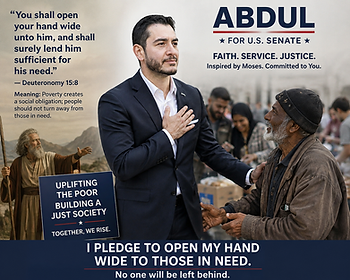
By redirecting attention from manufactured cultural fears toward economic insecurity, El-Sayed offered a potentially unifying political message. His promises to reduce corporate influence, improve economic security, and expand healthcare access reflected a belief that government should serve ordinary people rather than powerful financial interests.
Another compelling dimension was his understanding of patriotism. El-Sayed rejected the idea that patriotism consists merely of displaying flags, repeating slogans, or demanding unquestioning loyalty. He portrayed America as an unfinished democratic experiment, continuously improved through struggles against slavery, segregation, economic exploitation, and religious discrimination.
His personal journey reinforced that argument. He spoke with gratitude about the educational institutions, scientific opportunities, and public investments that helped shape his life. America, in his telling, was neither an irredeemably flawed society nor a nation beyond criticism. It was a country worth improving because its founding ideals remained larger than its failures.
Yet the speech also revealed limitations.

His sharp attacks on Donald Trump, JD Vance, and his Republican opponent energized supporters but risked alienating Americans who might otherwise appreciate his economic message. Political courage does not necessarily require personal ridicule. A victorious candidate has an extraordinary opportunity to assure defeated opponents that they, too, belong in the country's future. El-Sayed could have used that opportunity more generously.
For non-Michiganders, reactions will therefore vary. Progressive Democrats may hear a courageous reformer challenging entrenched power. Moderate Democrats may admire his achievement while questioning his confrontational approach. Independent voters may welcome his economic arguments but resist ideological rigidity. Conservative Americans may reject his political positions while recognizing the historical importance of his election.
These differences reveal the central challenge of his emerging national leadership.
Winning an election requires mobilizing supporters. Governing a divided country requires something more: the ability to persuade skeptics, respect disagreement, build coalitions, and recognize the dignity of political opponents.
El-Sayed possesses considerable political assets: intellectual confidence, a compelling personal story, clarity of purpose, and an ability to connect individual suffering with national policy. Whether these qualities develop into statesmanship will depend on his willingness to listen as forcefully as he speaks.
His victory represents an important milestone in America's evolving democracy. A Muslim American, whose loyalty was questioned because of his faith, has answered through the democratic process itself. But the greater achievement would be to transform that personal vindication into a broader invitation. America does not need another politician who speaks only to those already convinced. It needs leaders who can remind citizens that their shared difficulties are greater than their inherited suspicions.
El-Sayed's speech revealed the possibility of such leadership, even as its combative passages demonstrated the obstacles ahead.
His most enduring message should not be that his political enemies lost. It should be that American democracy becomes stronger whenever another barrier to equal citizenship falls.
His victory may belong to Michigan, but the responsibility it creates belongs to the entire American nation. The true measure of his leadership will be whether he can convert a historic victory into a politics of justice, compassion, and shared belonging.


Comments