Bridging Worlds: A Tribute to the Legacy of Yahiya Emerick

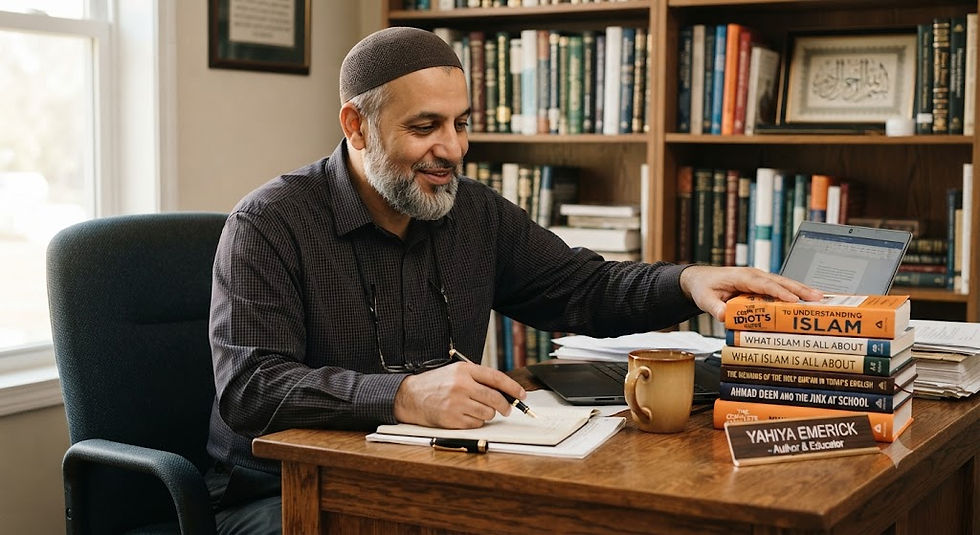
The challenge of being a Muslim in America has long been defined by a need for translation—not merely of language, but of context. For decades, American Muslims have navigated a landscape where their faith is frequently misunderstood, caricatured, or framed as a foreign imposition. Yahiya Emerick, who passed away on July 11, 2026, dedicated his life to dismantling these barriers. By bridging the gap between the rich, ancient traditions of Islam and the pragmatic, secular culture of the United States, Emerick provided a roadmap for generations to embrace their faith without compromising their identity as Americans.
Emerick’s path was unique from the start. A convert to Islam in 1989, he possessed the rare ability to see the faith from the perspective of an outsider looking in, while simultaneously inhabiting it as a devoted practitioner. This "bilingual" worldview allowed him to write with a clarity that few others could replicate. He did not speak in the hushed, exclusionary tones of traditionalist scholarship; instead, he spoke with the directness of an American educator. Whether he was penning a primer for The Complete Idiot’s Guide series or developing curriculum for Islamic schools, his voice was consistently marked by a desire to make the complex accessible and the spiritual practical.
His work was a testament to the idea that Islam is not a monolith, but a living, breathing tradition capable of thriving in a modern, Western democracy. Through books like What Islam Is All About, he provided a comprehensive, grounded foundation for young Muslims who were often caught between the expectations of their parents’ cultures and the demands of their own American lives. He championed the belief that being a good Muslim and a good citizen are not only compatible but mutually reinforcing.
Perhaps his most profound contribution, however, was his commitment to the next generation. By writing engaging fiction for youth, such as the Ahmad Deen series, he gave young American Muslims stories that reflected their own reality—stories where characters dealt with the same social pressures, humor, and challenges as any other teenager, all while striving to maintain their values. In doing so, he helped foster a sense of belonging in a country that often demanded they choose between their religion and their nationality.
Yahiya Emerick did more than just write books; he built an infrastructure for a native American Islamic identity. He recognized that for Islam to take deep root in North America, it needed to be articulated in the idiom of the people who live here. He moved the conversation away from polemics and toward understanding, empathy, and intellectual rigor.
As we reflect on his passing, we recognize that his legacy is woven into the bookshelves of thousands of American homes. He taught his readers that it is possible to hold fast to the light of faith while walking confidently through the culture of the West. His work remains a bridge—an invitation for Americans of all backgrounds to listen, learn, and find common ground. In his own words and through his tireless dedication, Yahiya Emerick proved that the American Muslim experience is not a contradiction but a vibrant, unfolding story that continues to enrich the tapestry of our nation.


Comments