Humanity Beyond Boundaries: Moments That Define Muslim Sahib

Updated: Jun 16

There are certain dates that become permanently engraved upon the heart. No matter how many years pass, they return with the same emotions, the same memories, and the same sense of loss. For me, one such date is July 3, 1986.
I was working at the Islamic Press Agency in East Burnham, near Slough in Buckinghamshire, England. It was around three o'clock in the afternoon when the telephone rang. The call had come from India. The voice on the other end delivered the news that every son dreads hearing. My father had passed away.
For a few moments, the words seemed unreal. I heard them, yet I could not fully comprehend them. Time appeared to stop. The world around me continued to move, but my mind stood still. For nearly half an hour, I sat frozen, unable to think, unable to react, unable even to accept what I had just been told. Thousands of miles separated me from my family, yet in that instant the distance felt immeasurable. My editor-in-chief, Dr. Fathi Osman, soon learned what had happened. With the kindness and compassion that characterized him, he immediately asked Sohal, the company driver, to take me home to London. I remember little of that journey. My thoughts were consumed by memories of my father—his face, his voice, his sacrifices, and the countless moments that suddenly seemed far more precious than they had ever appeared before.

Since that day, July 3 has ceased to be an ordinary date on the calendar. Every year, when it arrives, I withdraw from the routine of life and spend the day in quiet reflection. It is my annual appointment with memory. A day of seclusion. A day of gratitude. A day of reconnecting with the man whose influence continues to shape my life long after his departure from this world. I reflect not only on who he was, but also on what he stood for. I revisit the lessons he taught without preaching, the values he embodied without seeking recognition, and the examples he left behind through the simple honesty of his daily life.
Death separates us from those we love, but it cannot erase the imprint they leave upon our hearts. Some people depart from this world and are remembered only through photographs and fading stories. Others continue to live through the principles they planted in the lives of those around them. My father belonged to the latter group. The older I grow, the more I understand him. The more I reflect on his life, the more I appreciate the quiet strength that sustained him through hardship, the dignity with which he treated others, and the moral clarity that guided his decisions. Every July 3, I find myself returning to those memories—not merely to mourn his absence, but to celebrate his life. What follows are a few incidents that have remained with me over the years. They are simple stories, yet together they reveal the character of a man whose greatest legacy was not what he owned, but what he gave to others. These are only a few incidents. They do not include events during his imprisonment in Delhi's Tihar Jail and Ambala prison during the 1975-1977 period of MISA rule in India. With the exception of the lead picture, all others are drawn by a designer based on events.

Some people inherit wealth. Some inherit influence. Muhammad Muslim inherited neither. He inherited loss. Before he became known as a journalist, thinker, social reformer, and defender of justice, he was a child who knew what it meant to be vulnerable. He knew the loneliness of uncertainty, the anxiety of dependence, and the silent pain that accompanies the loss of parental protection. The wounds of orphanhood never entirely disappear. They remain hidden beneath the surface of life, shaping the heart in ways that only God fully understands. Yet there are two ways people respond to suffering. Some become hardened by it. Others become softened by it. Muhammad Muslim belonged to the second category. His own experiences taught him a lesson that would guide him throughout his life: every abandoned person is someone's child, every orphan deserves dignity, and every human being carries a sacred worth bestowed by God. The Qur'an repeatedly reminds believers of this truth. God asks: "Did He not find you an orphan and give you shelter?" (93:6). The verse was revealed about the Prophet Muhammad ﷺ, who himself experienced orphanhood. The message is profound: the memory of being cared for should inspire us to care for others. The Qur'an therefore commands: "So as for the orphan, do not oppress him." (93:9) And again: "They ask you concerning orphans. Say: Improving their condition is best." (2:220). Muhammad Muslim did more than quote these verses. He lived them. Throughout his life, he repeatedly crossed barriers of religion, caste, community, and social status to serve those whom society had forgotten. Four incidents stand out as enduring testimony to the moral vision that guided his life.

The Wrestler No One Claimed
The year was 1947. The subcontinent stood on the edge of Partition. Political tensions had reached dangerous levels. Rumors traveled from town to town. Distrust grew between communities that had lived together for centuries. In many places, a person's religious identity had become more important than his humanity. Amid this uncertainty, a Hindu wrestler from Bhelsa—today's Vidisha—arrived in Bhopal to participate in a wrestling competition. He never returned home. Soon after his arrival, he fell seriously ill and was admitted to a hospital. Despite treatment, he passed away. His death created an unexpected problem. No family member accompanied him. No address could be found. No relative could be contacted. His body remained unclaimed. As days passed, another difficulty emerged. Some local Hindus hesitated to perform the funeral rites because no one knew the deceased's caste. Social customs of the time made many reluctant to assume responsibility. The young man who had come to compete now lay abandoned in death. Muhammad Muslim could not bear the thought. To him, death erased the distinctions that divide people in life. A human being deserved dignity, regardless of religion, caste, or social standing. He approached a Hindu priest and requested that the proper funeral rites be performed. He personally paid for the arrangements. Then came a scene that many in Bhopal would remember for years. Four bearded Muslims lifted the bier of a Hindu stranger and carried him toward the cremation grounds. As they walked through the streets, people stopped and stared. The nation was being divided by religion. Yet here were Muslims carrying a Hindu man to his final resting place with honor and respect. On the way, it was noon prayer time. The men paused near a mosque and offered their prayers. Then they resumed their journey and completed the funeral rites. In an age of growing hatred, Muhammad Muslim offered a lesson in humanity. The wrestler's name may have been forgotten. The compassion shown to him has not.

The Orphan of Bengal
If Partition represented one of the greatest migrations in history, the Bengal Famine represented one of its greatest tragedies. Between 1943 and 1944, an estimated three million people perished from hunger, disease, and famine-related causes. Entire villages disappeared. Children wandered through streets and railway stations searching for food. Mothers watched helplessly as starvation consumed their families. The roads of Bengal became pathways of despair. During relief work, Muhammad Muslim encountered an infant who had survived while everything around him had collapsed. No one knew who his parents were. No one knew where he belonged. No one even knew his religion. He was simply a hungry child. Muhammad Muslim appealed to local residents to care for him. People sympathized but were unwilling to assume responsibility. Finally, he made a decision that would alter the child's destiny. He brought the infant to Bhopal and raised him as his own. Remarkably, he never treated the child as an object of charity. Nor did he make questions of identity the condition of his compassion. The child was fed, educated, protected, and loved. Years later, Muhammad Muslim helped arrange his marriage. When the young man started his own family, he donated part of his land to build a home. What began as the rescue of an abandoned infant became the creation of a future. The Prophet Muhammad ﷺ said: "The one who cares for an orphan and I will be in Paradise like this," and he joined his index and middle fingers together. (Sahih al-Bukhari) Muhammad Muslim understood that caring for an orphan is not a temporary act of generosity. It is a lifelong commitment to another human being's dignity.

The Daughter He Chose
Another child entered his life under equally remarkable circumstances. One evening, while living in a modest apartment in Delhi, Muhammad Muslim arrived home with a frail young girl. Gathering his children around him, he announced: "From today, she will live with us as your sister." The family was astonished. Who was she? Where had she come from? The girl's story slowly unfolded. She had been abandoned in early childhood. No one knew her parents. She had been placed in a Hindu orphanage because administrators assumed she belonged to a Hindu family. Years later, information surfaced suggesting that her parents had actually been Muslims. Efforts to locate relatives failed. The orphanage director contacted Muhammad Muslim. He explained that the girl would continue to grow up in the institution unless someone took responsibility for her future. Muhammad Muslim did not ask how much it would cost. He did not inquire about inconvenience. He simply replied: "If she has no home, let her come to ours." The girl became part of the family. Not a guest. Not a charity case. A daughter. Later, she moved to Bhopal and lived with Muhammad Muslim's brother. Together, the two brothers supported her education, provided for her needs, and protected her dignity. Most importantly, they never defined her by her past. They never introduced her as an abandoned child. They never allowed her history to become a source of humiliation. Instead, they gave her what every child deserves—a future. She eventually completed her education, married, and established her own family. For one forgotten girl, Muhammad Muslim became the answer to a prayer she may never have known she was making.

"You Must Kill Me First"
The final incident occurred during a period of communal violence in Delhi. News had spread that a Muslim from a local neighborhood had been killed while passing through a Hindu-majority area. Anger swept through the community. Soon afterward, a Hindu passerby entered a Muslim locality. A crowd surrounded him. Some demanded revenge. The frightened man had committed no crime. His only misfortune was belonging to the same community as the perpetrators of violence elsewhere. As tensions escalated, Muhammad Muslim arrived. He immediately placed himself between the crowd and the intended victim. The mob shouted. Some insisted that justice required retaliation. Muhammad Muslim disagreed. "This man did not kill anyone," he argued. But emotions had overwhelmed reason. The crowd remained determined. Then Muhammad Muslim uttered words that silenced them. "If you wish to kill him," he declared, "you must kill me first." He was not speaking symbolically. He meant every word. To reach the Hindu man, they would have to step over his body. The courage of one man succeeded where arguments had failed. The crowd hesitated. Its anger weakened. The intended victim was spared. That day, Muhammad Muslim demonstrated a principle rooted deeply in the Qur'an: "Whoever saves one life, it is as if he has saved all mankind."(5:32) The verse became reality through his actions.

The Religion He Practiced
These stories reveal more than isolated acts of kindness. They reveal a worldview. Muhammad, a Muslim, understood Islam not merely as a collection of rituals, beliefs, or communal identities. He understood it as a sacred responsibility toward God's creation. Faith, in his view, was measured not only by prayer and worship but by the way one treated the vulnerable, the forgotten, and even those from whom one had nothing to gain.
The Prophet Muhammad ﷺ said: "The most beloved people to Allah are those who are most beneficial to people." Notice the wording. Not the most beneficial to one's own family. Not the most beneficial to one's own community. Not the most beneficial to one's own religion. The most beneficial to people. That distinction defined Muhammad Muslim's life.
When a Hindu wrestler died alone in Bhopal, abandoned because no one knew his caste or family, Muhammad Muslim ensured that he received a dignified funeral. When famine left an infant orphaned and forgotten in Bengal, Muhammad Muslim brought him into his home and raised him as a son. When an abandoned girl faced a future without family or protection, he welcomed her into his household and introduced her to his children as their sister. When an innocent Hindu man faced death at the hands of an angry mob, Muhammad Muslim placed his own body between the crowd and its intended victim and declared, "If you wish to kill him, you must kill me first." Yet perhaps the most revealing test of his character came not in public, but in private. Not in the streets during communal violence. Not in relief work among strangers. But within his own family.

As he and his elder brother, Ghayoor Hasan, grew older, the question arose of how to divide their ancestral property in Bhopal. It was a situation that has broken countless families. Throughout the world, brothers who once shared toys, meals, and dreams often become adversaries when inheritance comes up. Property has divided families that poverty could not divide. Land has ended relationships that decades of affection had built.
The two brothers agreed to divide their inheritance through a neutral mediator. By the drawing of lots, the more valuable portion—the very house in which Ghayoor Hasan had spent many years of his life—fell into Muhammad Muslim's share. The elder brother immediately accepted the result and offered to vacate the property. But Muhammad Muslim refused. His brother insisted that the division had been conducted fairly. Muhammad Muslim insisted that fairness alone was not enough. "He is my elder brother," he repeated. "How can I ask him to leave the home in which he has lived all these years?" The matter eventually reached an arbitrator. Yet the younger brother remained steadfast.
For him, the issue was not ownership. It was gratitude. It was respect. It was love. Finally, Ghayoor Hasan accepted his younger brother's request and remained where he had always lived. It was perhaps one of the strangest property disputes imaginable. Neither brother fought to gain more. Each fought to give more away.
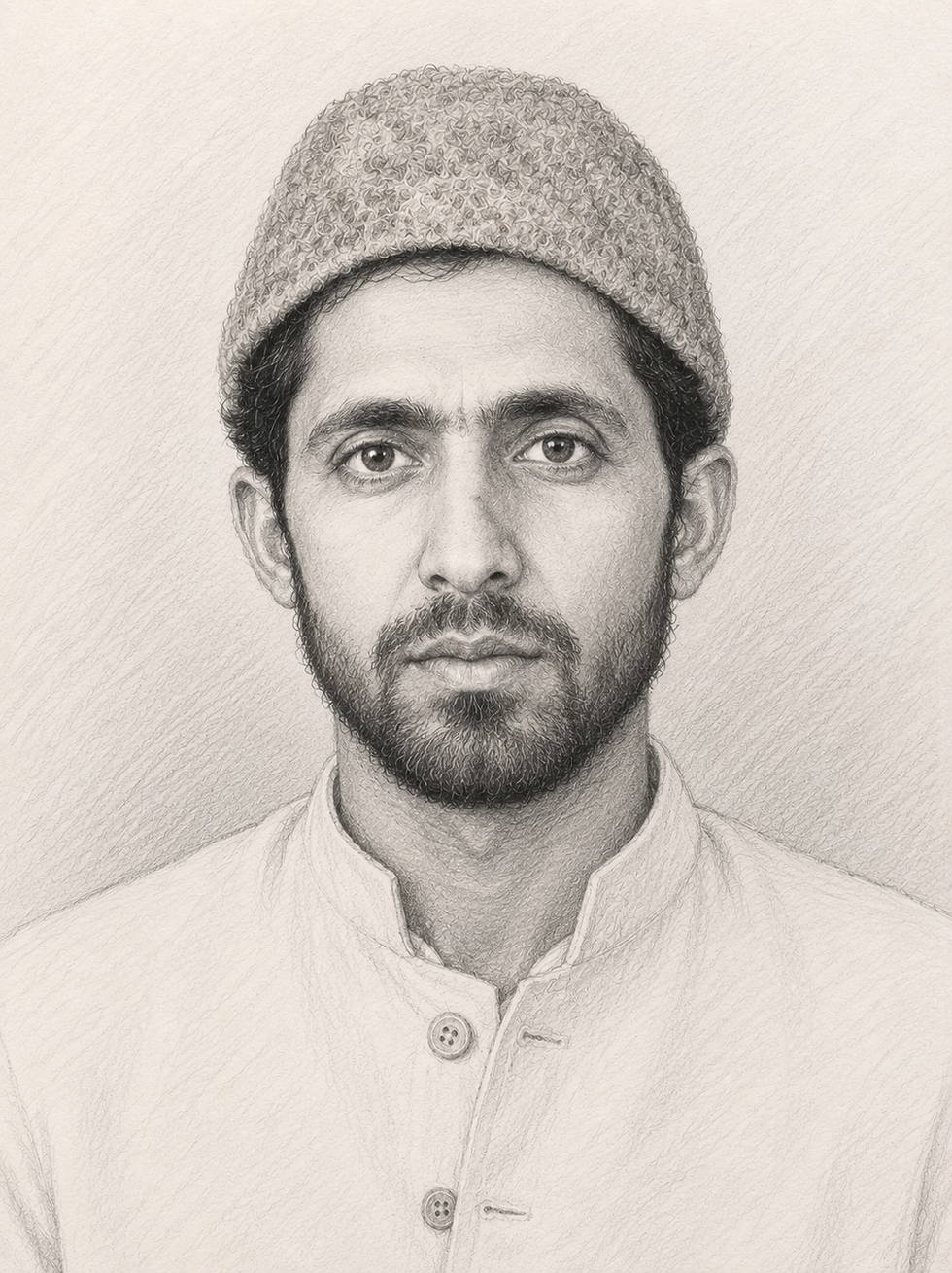
The same man who had protected strangers also protected his elder brother's dignity. The same heart that had opened itself to abandoned children refused to close itself when questions of inheritance arose. For Muhammad Muslim, relationships were never secondary to possessions. People mattered more than property. Human dignity mattered more than legal entitlement. Love mattered more than ownership. His actions echoed the Qur'anic declaration: "We have honored the children of Adam." (17:70) The verse does not speak only of Muslims. It speaks of humanity. Perhaps this was the lesson orphanhood had taught him from childhood. A child who has experienced vulnerability learns to recognize vulnerability in others. A heart that has known loss becomes sensitive to loss wherever it encounters it. The pain that might have made him bitter instead made him compassionate.
History often remembers rulers, politicians, generals, and wealthy men. Their names fill monuments and textbooks. Yet there is another kind of greatness that rarely attracts public attention. It is the greatness of those who quietly restore dignity where it has been denied. Those who choose mercy when anger is easier. Those who choose generosity when self-interest is expected. Those who place human beings above possessions.
Muhammad Muslim belonged to that company. In a century scarred by famine, Partition, communal violence, social prejudice, and political upheaval, he remained faithful to a simple conviction: every human being possesses a dignity bestowed by God. Whether that human being was a Hindu wrestler, an orphaned child, an abandoned girl, an innocent passerby, or even an elder brother standing across a table discussing inheritance, his response remained the same. He chose humanity. He chose compassion. He chose love. And because he did, his legacy endures long after the properties he inherited, the possessions he owned, and the controversies of his age have faded into history. Some people leave behind wealth. Some leave behind influence. Muhammad Muslim left behind something far rarer: an example.


Abbajan's respect for elders and affection for youngsters was a defining trait of his character. Despite having everything, he chose to spend his life in a small house in Chooriwalan, Delhi. All kinds of people came to visit, but he remained completely indifferent to their social status or rank. He had no desire for fine clothes or fancy food. Aslam Bhai, look at this—he had nothing of his own, yet he never complained. Once, some people were invited for dinner at our house. A gentleman’s voice could be heard shouting angrily from the room. When those guests were about to leave, Ammi Tayyeba and I hid behind the kitchen door to watch. We saw Abbajan bending down under the daybe…
Nana Abba is an inspiration to us and to all humanity. I am blessed to be associated with him. All the stories are so beautiful and moving. May we practice such Islam and carry on his values. May Allah reward him for all the good deeds. I want to thank you for writing such beautiful articles and enlightening our lives. May Allah reward you and keep you in good health.
What a wonderful human being - the kind of being that our prophet would have been proud of - the kind of being we are all 'supposed' to look like.
kindness, empathy, love and humanity is our religion throughout the world.
Thank you for sharing this story and now i understand better where YOUR heart was weaved💕💕💕
I liked your use of AI generated graphics. They do recreate a virtual reality and help comprehend an event. I wish we could practice that Islam, he practiced, innocent, caring, peaceful and sould soothing.
Moving!