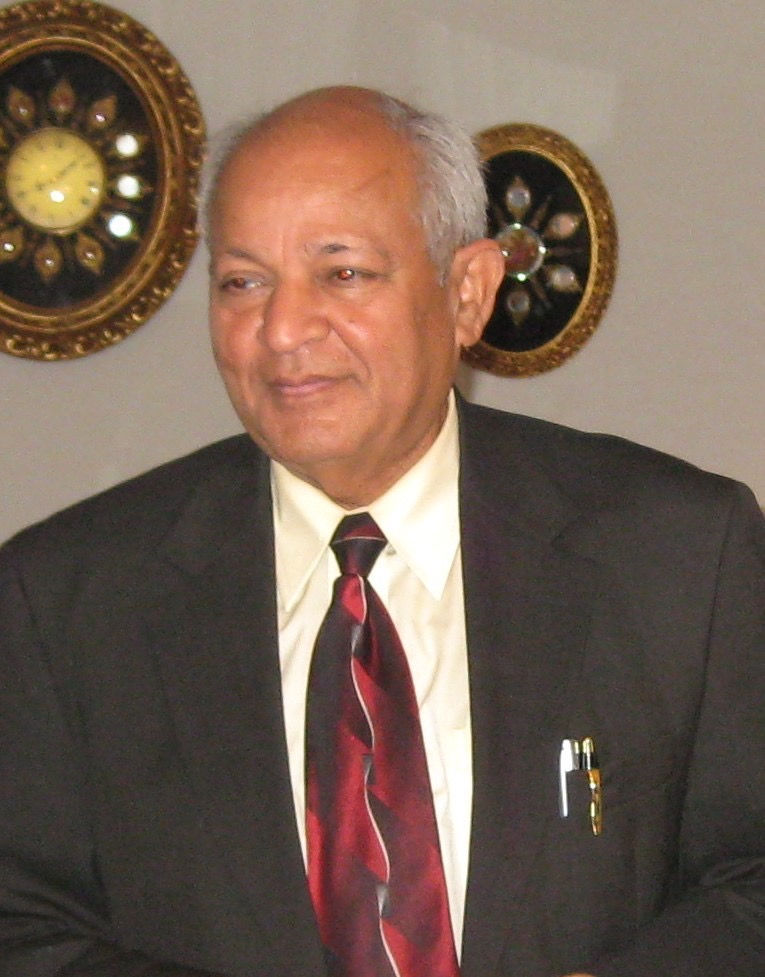
In Loving Memory of Dr. Hameed Khan(1935–2026)

Updated: Feb 25
By Dr. Aslam Abdullah
“O tranquil soul, return to your Lord, well-pleased and pleasing. Enter among My servants. Enter My Garden.” — Qur’an 89:27–30
“O tranquil soul, return to your Lord, well-pleased and pleasing. Enter among My servants. Enter My Garden.” — Qur’an 89:27–30 On February 24, 2026, in Los Angeles, California, Dr. Hameed Khan returned to his Creator at the age of ninety-one. His life stretched across empires and oceans, across partitions and promises — from the princely state of Manavadar in British India, through the birth pains of Pakistan, to the vast, demanding horizon of America. He did not merely pass through history. He steadied himself within it. And he served.
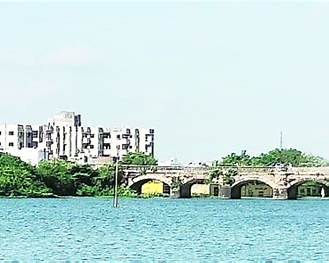
Dr. Hameed Khan was born in 1935 in Manavadar, a small princely state in Kathiawar — today part of Gujarat, India. It was ruled by a Muslim Nawab under British colonial administration, a place where loyalty, governance, and public trust defined daily life. His father, Abdul Wahab Khan Asim, served as Ataleeq and treasurer of the state — a role that required integrity beyond reproach. From him, Hameed inherited discipline, moral steadiness, and a reverence for responsibility. From his mother, he inherited gentleness. From history, resilience. Partition was not a chapter in a textbook. It was lived upheaval. When Manavadar’s ruler chose accession to Pakistan and political conflict followed, the family left behind land, familiarity, and position. Migration was not ambition; it was survival wrapped in hope.
And young Hameed grew into adulthood in a nation still finding its footing. He belonged to a large and close-knit family: seven sisters — Qudsia, Zakia, Nafisa, Wasima, Anisa, Amina, and Samina — and one brother, Professor Dr. A. T. Khan. Their bonds endured across decades and continents. When his younger sister passed away last year, he carried the ache quietly. Now, perhaps, the reunion of siblings is complete — a mercy entrusted to Allah. “Indeed, to Allah we belong, and to Him we shall return.” — Qur’an 2:156
After completing high school in India, Dr. Khan pursued medicine in Pakistan and graduated in 1959 with his MBBS from Dow Medical College in Karachi — one of the most rigorous and respected institutions in the region. In 1960, he married, beginning a partnership rooted in loyalty, patience, and shared endurance. His wife would become the quiet pillar of every migration and every rebuilding. Many of his classmates left for advanced studies abroad. It was the expected path for promising physicians of that era. But his father fell ill. And Dr. Hameed Khan stayed. The first great decision of his adult life was not driven by ambition, but by duty. He refused an overseas advancement to care for his father. For him, filial devotion was not sentiment. It was an obligation sanctified. “Your Lord has decreed that you worship none but Him, and show excellence to parents.” — Qur’an 17:23 He would live that verse twice.

In Karachi, during Pakistan’s formative decades, Dr. Khan practiced medicine at a time when the country’s healthcare system was expanding under immense pressure. He helped build Abbasi Shaheed Hospital and eventually served in charge of the institution. Leading a public hospital required more than clinical skill. It demanded administrative courage, ethical clarity, and compassion for the underserved. He possessed all three. At a time when doctors were restricted from leaving Pakistan, Prime Minister Zulfikar Ali Bhutto, during a hospital tour, granted Dr. Khan special permission to travel abroad — an uncommon recognition of his professional stature. Doors opened. But destiny would test him again.
In the early 1970s, Dr. Khan migrated to the United States and began residency and specialization training in Chicago. Like many immigrant physicians, he started again despite prior leadership. It was a humbling season — long hours, new systems, rebuilding reputation. Then news came from Pakistan: his mother was seriously ill. He paused his specialization and returned to care for her. For the second time in his life, ambition bowed to devotion. Later, he would bring his mother and sister to the United States, helping them migrate and settle securely. Responsibility, for him, was not symbolic. It was enacted.
He and his wife began their American chapter in Chicago. Both worked diligently. Their children — Junaid, Obaid, and Jeena — were born abroad and migrated with their parents, taking root in new soil together. By the mid-1970s, the family moved to Los Angeles, where Dr. Khan established his practice in the South Bay. There, he became known not merely as a physician, but as a presence. His punctuality was legendary. His standards were exacting. His ethics were firm.

Patients found reassurance in him. He served underserved communities not for applause but because conscience demanded it. His clinic was more than a medical office; it was a sanctuary of listening. He greeted people with warmth, often with humor, sometimes with sweets in hand. Healing, to him, was not mechanical. It was human. Meanwhile, service blossomed across the extended family. Nafisa apa established a daycare center that evolved into a preschool, nurturing young minds. Mushtaq bhai engaged in real estate, building stability for families. Across generations, they planted institutions of care, education, and opportunity.
After sixty-five, many settle. Dr. Khan expanded. He became a certified pilot and a certified scuba diver. He sailed open waters. He flew a Cessna with calm precision. He dove in Cancun’s depths. He traveled, learned, and explored. His life quietly declared: growth does not retire. At home, he cultivated what he called his “Garden of Eden.” Plants flourished under his attention. Gardening was not a hobby but a metaphor — patient tending, steady watering, gentle pruning. “And it is He who sends down rain from the sky; and We bring forth thereby the growth of all things.” — Qur’an 6:99 His life, too, was growth.
He was preceded in death by his beloved wife, whose absence he felt deeply. Their shared migration from South Asia to America was a testament to companionship grounded in mutual respect. He is survived by his sons Junaid and Obaid; his daughter Jeena; daughters-in-law Sarah and Emily; grandsons Asim, Amir, and Zachary; his sisters; and extended family. To them, he was not simply a doctor. He was an anchor. He hosted gatherings filled with laughter. He delighted in watching children play in the yard he tended. For his grandchildren, he embodied discipline wrapped in tenderness. For his children, perseverance anchored in integrity. For his siblings, the elder whose counsel carried weight.

At ninety-one, Dr. Hameed Khan had witnessed empires fall, nations rise, technologies transform, and generations mature. Through it all, he remained grounded in faith. “Every soul shall taste death.” — Qur’an 3:185 But death in Islam is not extinction. It is a return. The Prophet Muhammad (peace be upon him) taught that when a person dies, their deeds continue through lasting charity, beneficial knowledge, and righteous children who pray for them.
Dr. Hameed Khan leaves behind all three. His service to patients was charity. His medical knowledge benefited countless lives. His children and grandchildren are living prayers. To his family: grief is love without visible form. To his siblings: your arc from Manavadar to Pakistan to America is rare and noble. To his patients: your healing is part of his ledger. May his grave be filled with light.May he be reunited with his beloved wife and departed sister. May his record be heavy with good deeds. May patience settle upon every heart that mourns him. His story is not merely one of migration or medicine. It is the story of a man who chose responsibility over recognition, devotion over distinction, service over self. May Allah grant him Jannat al-Firdaus. May his memory continue to inspire. May peace descend upon his soul.
Innā lillāhi wa innā ilayhi rājiʿūn.


Thank you for sharing the story of a beautiful, purpose led life. I am lucky to know Dr. Hameed Khan through his children.
He lived his beautiful life, that we wish. Thanks Dr. Abdullah for a beautiful obituary
We are from Allah and To Him We shall return. We will miss Dr Khan. He used his phone to find verses read by the Imam. He always sat the in the from row.
He heavily contributed to the establishment of the ICSB
May his soul rest in peace.
What a great person with a tremendously good background. For sure it's the biggest loss for the community and the family but he led a very successful life not only for himself but for the others too. He has done some great jobs for that he will be remembered forever .l wish I have met that great personality. I pray to Allah give sabr to the family.
What a beautifully written obituary. Thanks, Dr. Abdullah.
Anybody who met Dr. Khan once became his fan.
A torch-bearer for the entire family and source of strength for the community ol LA South Bay Area, his departure has left a big vacuum behind. 🙏💐😍