Pakistan, Governance, and the Failure of Moral Statecraft


Modern political analysis often distinguishes between religious identity and ethical governance. The case of Pakistan illustrates why this distinction is not merely theoretical but essential. Created in 1947 as a homeland for Muslims of South Asia, Pakistan was envisioned—at least rhetorically—as a state where Muslims could live with dignity, justice, and freedom, inspired by Islamic moral principles. Today, Pakistan is more than 97 percent Muslim, constitutionally Islamic, and densely populated with mosques, madrasas, Islamic colleges, and universities. It produces vast numbers of Qur’an memorizers (ḥuffāẓ), religious scholars, and clerics. Yet from the standpoint of Islamic and internationally recognized norms—rule of law, civil liberties, freedom of expression, due process, and equality before the law—Pakistan consistently underperforms. Arbitrary detention, suppression of dissent, politicization of the judiciary, enforced disappearances, and systemic inequality are widely documented by international observers. This contradiction raises a fundamental question relevant not only to Muslims but to global political ethics:
Can a state claim moral legitimacy through religious identity while violating the ethical principles that religion itself places at the center of governance?
To answer this, it is instructive to compare Pakistan’s political practice not with Western secular models but with early Islamic governance, particularly the political framework established by the Prophet Muhammad ﷺ in Medina.
The Ethical Foundations of Islamic Governance

Islamic political thought does not begin with power; it starts with moral restraint on power. The Qur’an consistently frames authority as a trust (amānah), not a privilege. “Indeed, God commands you to render trusts to whom they are due, and when you judge between people, to judge with justice.”— Qur’an 4:58
Justice (ʿadl), human dignity (karāmah), freedom from coercion (ḥurriyyah), and accountability (muḥāsabah) are not secondary values in Islam; they are its ethical core. Classical Muslim jurists repeatedly emphasized that the legitimacy of rule depends on justice, not on the ruler’s religiosity. This is why medieval Muslim thinkers could state—without contradiction—that God sustains a just state even if it is unbelieving and does not sustain an unjust state even if it is believing. From an international perspective, this aligns Islam not against modern human-rights discourse, but alongside it.
The Constitution of Medina: Islam’s First Political Charter
The clearest historical expression of Islamic governance is found in the Constitution of Medina (Ṣaḥīfat al-Madīnah), drafted by the Prophet Muhammad ﷺ shortly after he migrates to Medina in 622 CE. This document,

widely recognized by historians as one of the earliest written constitutional frameworks, established a pluralistic political order in a deeply divided society.
Key Principles of the Constitution of Medina
Rule of Law Over Tribal or Religious Power: The constitution bound all signatories—Muslims and non-Muslims alike—to a common legal framework. No group, including Muslims, was above the law.
Religious Freedom and Pluralism: Jewish tribes were recognized as full political partners: “The Jews have their religion, and the Muslims have theirs.”
Collective Security and Due Process: Justice was to be administered through agreed procedures, not arbitrary retaliation.
Accountability of Leadership: Authority rested on consent and moral obligation rather than coercion.
Human Dignity as a Political Principle: Protection of life, property, and honor applied universally.
For international audiences, the Constitution of Medina stands as evidence that Islamic governance at its origin was inclusive, law-bound, and ethically constrained, not authoritarian or theocratic.
Pakistan’s Political Practice: A Structural Departure
Measured against this early Islamic framework, Pakistan’s political system shows a deep structural departure.
Concentration of Power Without Accountability
One of the defining features of Pakistan’s political life has been the dominance of unelected military authority. Whether through direct rule or indirect control, power has frequently escaped civilian oversight. In early Islamic governance, by contrast, Leaders were answerable to law, and public criticism was tolerated. Even the Caliph could be questioned. The second Caliph, ʿUmar ibn al-Khaṭṭāb, openly, famously accepted public correction from ordinary citizens—an ethos incompatible with contemporary political repression.
Suppression of Dissent vs. Moral Accountability
International human rights norms regard freedom of expression as a foundational safeguard against abuses of power. Islam does the same. “The best form of struggle is a word of truth spoken before a tyrannical ruler.” — Hadith. In Pakistan, dissent is frequently framed as disloyalty or subversion. Journalists, activists, and opposition figures face intimidation, detention, or worse. This environment contradicts both Islamic ethics and global democratic standards.
Ritual Visibility vs. Ethical Substance
From the outside, Pakistan appears intensely religious: Mosques dominate cityscapes. Islamic terminology shapes public discourse, and leaders publicly display personal piety. However, Islam itself warns against equating outward religiosity with moral legitimacy. “Righteousness is not in turning your faces toward the east or the west, but righteousness is belief… and standing firmly for justice.” — Qur’an 2:177
Early Islamic governance prioritized ethical outcomes over symbolic displays. The Prophet ﷺ never used religious performance to shield authority from criticism. For international observers, this highlights a universal lesson: public piety cannot substitute for institutional justice.
Knowledge Without Ethics: The Danger of Religious Instrumentalization
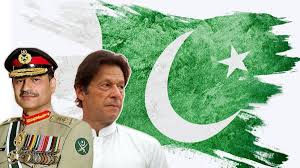
In recent years, Pakistan has been governed under the shadow of military leadership that publicly claims Qur’anic memorization. In Islamic tradition, memorizing scripture is honorable—but only if it produces ethical restraint. The Qur’an issues a sharp warning: “The example of those entrusted with scripture but who failed to uphold it is like a donkey carrying books.” — Qur’an 62:5 For global audiences, this speaks to a broader phenomenon: the instrumentalization of religion by power, where sacred language legitimizes coercion rather than restrains it. Early Islamic governance moved in the opposite direction—reducing rulers' power through moral obligation.
Freedom: An Indigenous Islamic Value
Authoritarian narratives often claim that freedom is a Western imposition. Historically, this is inaccurate. “There is no compulsion in religion.” — Qur’an 2:256 If faith itself cannot be coerced, political conscience cannot be crushed in its name. The Constitution of Medina recognized freedom of belief and expression as necessary for social stability. Pakistan’s restrictions on speech and political choice thus represent not an Islamic model, but a departure from Islam’s earliest political ethic.
The Global Relevance of Pakistan’s Crisis
Pakistan’s failure is not unique; it reflects a global pattern where religious identity is used to legitimize unaccountable power. What makes Pakistan significant is that it explicitly claims Islam as its moral foundation. For international audiences, the lesson is not about Islam as a faith, but about governance as an ethical project: Religious states are not immune to injustice, moral legitimacy cannot be inherited through identity, and justice, dignity, and freedom must be institutionalized
Returning to Ethical Governance, Not Religious Rhetoric
Early Islamic governance—especially as articulated in the Constitution of Medina—offers a vision of political order grounded in the Rule of Law, Pluralism, Accountability, and Human Dignity. Pakistan’s contemporary political reality stands in tension with this vision. Its crisis is not a failure of Islam, but a failure to govern ethically in Islam’s name. For the international community, this distinction matters. Critiquing Pakistan’s governance is not an attack on religion; it is a call to align political power with the universal moral standards that Islam itself articulated at its birth. Until justice restrains power, dignity protects citizens, and freedom safeguards conscience, Pakistan will remain a religious state that fails the ethical test of the religion it claims to represent.
Selected References (Indicative)
The Qur’an (2:177; 2:256; 4:58; 62:5)
Constitution of Medina (Ṣaḥīfat al-Madīnah)
Ṣaḥīḥ Muslim, al-Tirmidhī (Hadith on justice and tyranny)
al-Māwardī, al-Aḥkām al-Sulṭāniyyah
Ibn Taymiyyah, al-Siyāsah al-Sharʿiyyah


Comments