The Son Who Returned
- Aslam Abdullah
- 23 hours ago
- 5 min read


The railway station in Bhopal was crowded that day. Trains arrived in clouds of steam and noise; passengers hurried across platforms, vendors shouted, porters pushed through the crowd, and families embraced loved ones after long journeys. Yet for one man, the station had become a place of restless anticipation. From one end of the platform to the other, Ghayour Hasan walked, a respected administrative officer of Bhopal. He paced continuously, peering into every arriving carriage, his heart beating faster with each passing minute. He was waiting for his son. Not a son returning from a neighboring city. Not a son coming home after a few months away. He was waiting for a son he had not seen since infancy.
Nearly two decades earlier, history had intervened between father and child. The Partition of India had drawn a border across the subcontinent and, in countless cases, across families themselves. His eldest son, Javed Umar, had been taken to Pakistan by his maternal grandparents when he was still a toddler. There he was raised, first in Multan and later elsewhere, growing into adulthood far away from the father who thought of him every day.
Now, at last, the son was coming home. A telegram had arrived informing the family that Javed had traveled from Pakistan and that his uncle, Muhammad Muslim of Delhi, had placed him on a train bound for Bhopal. Every whistle that echoed through the station seemed to carry hope. Every arriving passenger looked, for a moment, like the son he imagined. The train finally arrived. Passengers stepped down. Families reunited. The platform gradually emptied. Ghayour Hasan searched every compartment. He walked through the length of the train once. Then again. And again. But the face he longed to see was nowhere. As the train departed and the station resumed its ordinary rhythm, a father's heart sank beneath the weight of disappointment.

Communication was difficult in those days. There were no mobile phones, no instant messages, no easy way to verify what had happened. He could not immediately contact his younger brother in Delhi. Had Javed missed the train? Had there been a misunderstanding? Was he safe? The questions tormented him. Slowly, he returned home. The excitement with which he had left had vanished. His shoulders drooped. His face seemed years older. Tears glistened in his eyes as he entered the house and quietly informed his family that the son they had awaited had not arrived. The news spread through the home like a shadow.
His wife, whom he had married after the passing of Javed's mother, sat quietly in a corner, her silence speaking more eloquently than words. Beside her, his daughter Maimoona lowered her gaze, struggling to contain the disappointment that weighed heavily on her heart. For years, she had nurtured a dream. Somewhere beyond borders and circumstances lived a younger brother—a brother whose voice she had never heard, whose face she could barely remember, and whose presence existed only through family stories, faded photographs, and cherished imagination. In her mind, she had met him a thousand times. She had imagined his smile, wondered about his life, and longed for the day when the emptiness of separation would finally be filled. That evening was supposed to be that day. The hope of reunion had illuminated the household for weeks. Every conversation had carried anticipation; every preparation had been touched by expectation. But now those hopes had quietly dissolved. A heavy sadness settled over the home. No one seemed able to find the right words. Conversation faded into silence. Faces that had been bright with anticipation now appeared withdrawn and distant. Each person sat absorbed in private thoughts, carrying a sorrow too personal to express. The room was filled not with noise, but with the ache of unfulfilled longing. Sometimes disappointment arrives not with tears or lamentation, but with silence—a silence that settles over a family like an evening shadow. That night, every heart carried its own burden of sadness, mourning not a loss of life, but the loss of a moment they had waited years to experience.

Then, suddenly, there was a knock at the door. No one paid much attention. Ayesha, the youngest daughter, rose reluctantly and walked toward the entrance. She opened the door. Standing before her was a young man carrying the weariness of a long journey. His face showed both uncertainty and hope. In a trembling voice, he asked, "Is this the house of Ghayour Sahib, the administrative officer of Bhopal?" Assuming that the visitor had come on some official matter, Ayesha replied politely, "Yes, but he is busy at the moment." The young man paused. Then, with emotion breaking through his voice, he softly said, "I am his son, Javed Umar... from Pakistan." For a moment, time stood still. Ayesha stared at him. The words seemed impossible. Then realization swept over her like a wave. The brother she had never seen. The brother she had only heard about. The brother separated by history before she was even born. He was standing before her. Overcome with emotion, she almost collapsed in tears. Leaving the door wide open, she ran through the house toward the family gathered in the main hall. Breathless and crying, she shouted, "He is here! He is outside! Javed Bhai has come!" The room erupted. People rose from their seats. Disbelief turned into joy. Sadness gave way to astonishment.
And at the doorway stood a young man who had traveled across borders, across memories, and across the wounds of history to find the family he had never known. Javed Umar had finally returned to the city of his birth. Beside him was his cousin and close friend, Jameel Ahmed, who had accompanied him on the journey. For the first time in his life, Javed stood before his father. For the first time, a father looked into the eyes of the son he had lost to the upheaval of Partition. There were no words adequate for such a moment. Years of separation dissolved in tears. Questions that had waited decades could wait a little longer. What mattered was that father and son were finally together.
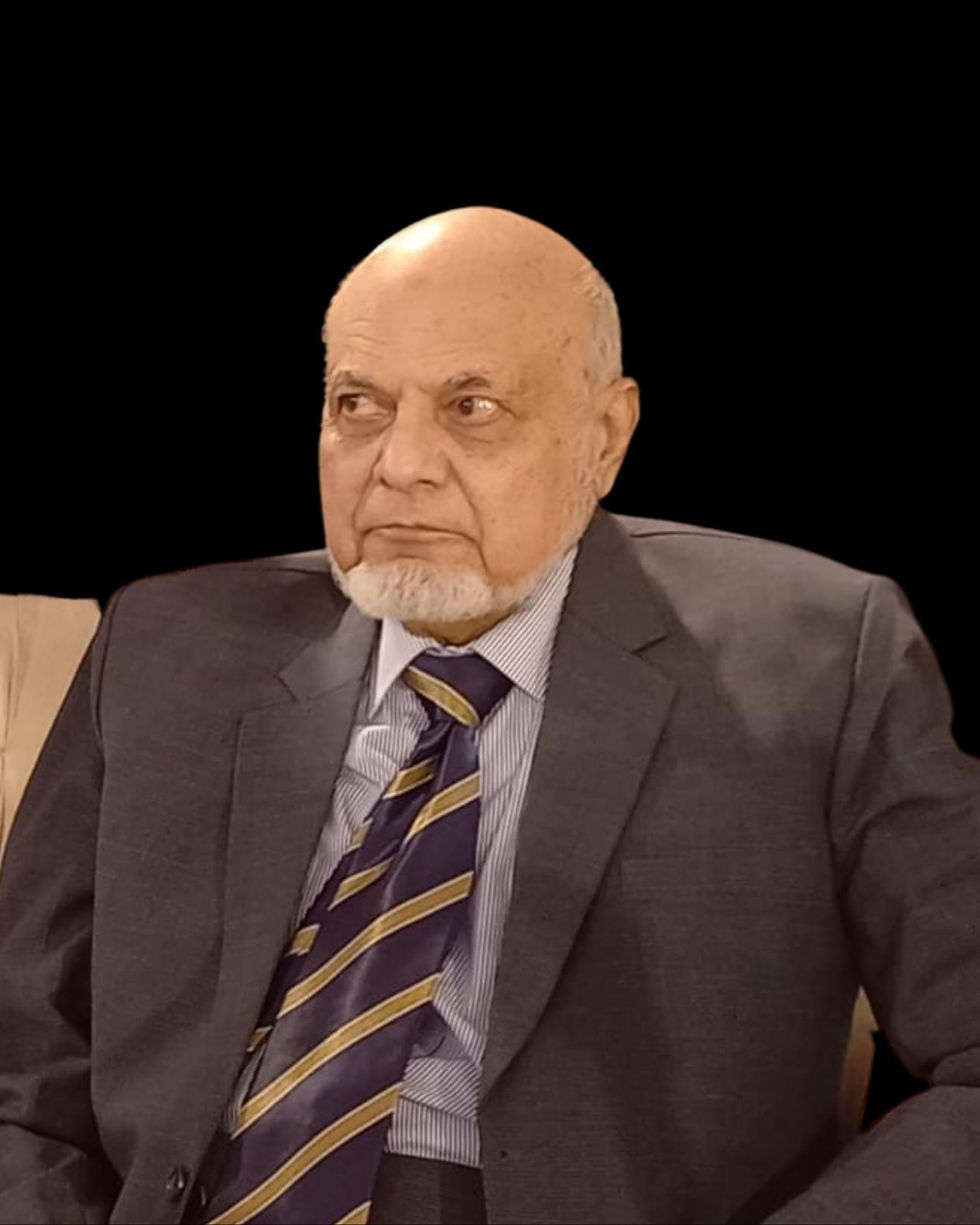
Javed's story was born from both tragedy and grace. Born in Bhopal on 10 August 1945, he lost his mother, Aziz Fatima, before he was old enough to remember her embrace. After Partition, his maternal grandparents migrated to Pakistan and raised him with love and devotion. He grew up in Multan, completed his education, later earned a Bachelor of Commerce degree in Karachi, and eventually built a successful professional career. Yet despite growing up without either parent, he never became bitter. He never complained about what life had taken from him. He never allowed resentment to define him. Instead, he accepted his circumstances as part of Allah's wisdom and carried himself with gratitude, dignity, and quiet strength. Perhaps that is why the reunion in Bhopal was so beautiful. It was not merely the meeting of a father and son. It was the triumph of love over distance. It was proof that borders can divide lands but cannot erase blood. And it was a reminder that sometimes Allah answers prayers not immediately, but after years of patience, in ways more beautiful than we could ever imagine.



Comments