The Wound That Does Not Close: Karbala and the Conscience of History

Aslam Abdullah

Every year, as the Islamic calendar turns and the month of Muḥarram arrives, Muslims across the world exchange greetings of peace and offer prayers for a better year. The wishes are sincere, the hope genuine. Yet Muḥarram carries within it something heavier than hope — a memory so charged with grief and moral consequence that to pass through it without reflection is to miss the most searching question the Islamic tradition puts to its own adherents: not what do you believe, but what are you willing to stand for when standing costs everything? The answer, given once on a parched plain in the Iraqi desert in the year 680 CE, has never been surpassed for its clarity or its cost.
The Sanctity That Was Broken
Long before the revelation came to Muhammad ﷺ, the Arabs had observed four months of sacred truce — periods in which the sword was sheathed, the blood feud suspended, and the ordinary brutality of tribal life briefly interrupted by something resembling conscience. The Qur'an did not abolish this tradition; it consecrated it, weaving the sanctity of these months into the fabric of divine law. Among them was Muḥarram — the first month of the year, a threshold of time intended to remind humanity that peace is not merely the absence of war but a sacred obligation, a covenant between the believer and God. Within fifty years of the Prophet's death, that covenant was shattered — not by pagans, not by enemies of the faith, but by men who called themselves Muslims and commanded Muslim armies. In Muḥarram of 61 AH, on the tenth day of the very month God had set aside for peace, the grandson of the Prophet Muhammad ﷺ was surrounded on the plain of Karbala, denied water for three days, and killed along with the small company of family and companions who had refused to abandon him. His name was al-Ḥusayn ibn ʿAlī. He was fifty-seven years old. He had grown up in the household of prophecy, had sat on the Prophet's lap as a child, had been called — by the man who brought Islam to the world — one of the masters of the youth of Paradise. He was killed by Muslims, on holy ground, in a holy month, on the orders of a caliph who demanded his allegiance and received his refusal.

More Than a Battle
It is tempting, and historically convenient, to reduce Karbala to a political dispute — a succession crisis, a power struggle between rival dynasties, the kind of violent contest for authority that has punctuated the history of every civilization. This reading is not entirely wrong. There was, undeniably, a political dimension: Yazīd ibn Muʿāwiyah had inherited the caliphate from his father through dynastic succession rather than the consultative process the early Muslim community had practiced, and Ḥusayn's refusal to pledge allegiance was, among other things, a constitutional objection. But to leave the analysis there is to miss everything that Karbala has meant to the billions of people who have mourned it across fourteen centuries. What happened at Karbala was not merely a battle between two political factions. It was a confrontation between two fundamentally different understandings of what authority is, where it comes from, and what limits it.
Ḥusayn's position was simple and devastating: that no ruler, however powerful, stands above the moral law; that the legitimacy of governance derives not from the size of one's army but from the justice of one's conduct; and that a man who knows this truth and submits to tyranny in order to preserve his own safety has not saved his life — he has merely postponed the death of his conscience. Yazīd's position was equally clear, and equally ancient: that power is its own justification, that the stability of the state is the highest political good, and that those who disturb it — however noble their motives — must be brought to heel. These are not seventh-century positions. They are the two positions that every age, society, institution, and individual eventually faces. Karbala made them visible with a terrible, irreversible clarity.

The Archetype That Walks Among Us
History has given Yazīd ibn Muʿāwiyah a face and a name, and scholars have debated for centuries the precise degree of his personal responsibility for what happened at Karbala. These debates have their place. But the deeper truth that Karbala reveals is that Yazīd is not primarily a historical individual. He is an archetype — a recurring human type that appears in every era, wearing the costume of its time. Yazīd is every ruler who believes that the possession of power confers immunity from moral accountability. He is every institution that silences dissent not because the dissent is wrong but because it is inconvenient. He is every ideology that wraps cruelty in the language of necessity, every government that calls oppression order, every movement that uses the name of God to sanctify the ambitions of men. The Qur'an itself identifies this archetype long before Karbala, in the figure of Pharaoh — not merely a historical king of Egypt but an eternal symbol of the human tendency to place the self above the law, to demand worship where only service is owed, to mistake the loudness of power for the rightness of truth. What Karbala added to this ancient archetype was something new: the demonstration that the Yazīd-type could emerge from within a community of faith, could speak the language of religion while betraying its substance, could invoke the name of God while killing God's most beloved. This is the wound that Karbala opened in Islamic consciousness — not merely the grief of a martyr's death, but the recognition that the enemy of justice is not always the outsider. Sometimes it wears familiar clothes and speaks familiar words and sits in familiar seats of authority.
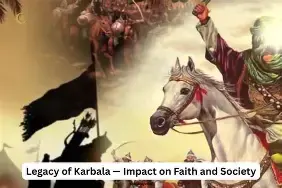
The Defeat That Was a Victory
By every conventional military measure, Karbala was a catastrophic defeat. Ḥusayn's company numbered seventy-two. The army arrayed against them numbered in the tens of thousands. The outcome was never in doubt. And yet something extraordinary happened in the aftermath of that massacre — something that no general, no caliph, no empire has ever been able to fully explain or fully suppress. The swords that killed Ḥusayn rusted. The empire that ordered his death crumbled. The dynasty of Yazīd lasted less than a century before it was swept away by the very forces of history it had tried to control. But Ḥusayn's name grew. His stand on that dry plain became, across the centuries, one of the most powerful symbols of moral resistance in human history — not only for Muslims, but for anyone who has ever faced the choice between comfortable submission and costly integrity. This is the paradox that Karbala teaches: that a man who dies for a principle does not lose. He transforms his defeat into a permanent question addressed to every generation that follows. The question is not whether Ḥusayn was right — history has answered that with the reverence of fourteen centuries. The question is whether those who claim to follow his tradition have the honesty to ask themselves where they stand in relation to the values he died for.

The Mirror Muḥarram Holds
When Muslims pray at the beginning of the new year for peace, prosperity, and divine blessing, the prayer is incomplete without an examination of conscience. Peace does not descend upon communities that tolerate injustice in silence. Prosperity built on the exploitation of the weak is not a blessing — it is a debt that history eventually calls in. And divine blessing, the tradition consistently teaches, is not a reward for ritual observance alone, but for moral seriousness — for the willingness to ask hard questions and accept difficult answers. The hardest question that Muḥarram poses is not about the seventh century. It is about the present. It is the question of whether the values that Yazīd represented — the subordination of conscience to power, the sacrifice of justice for stability, the use of religion as a tool of control rather than a voice of accountability — still operate among us. In our politics. In our institutions. In the way we treat those who speak inconvenient truths. In the silence we maintain when the powerful act unjustly and the cost of speaking is high. Zaynab, Ḥusayn's sister, who survived the massacre and was taken in chains to the court of Yazīd, understood this with a clarity that has never been bettered. Standing before the man who had ordered her brother's death, she did not weep. She spoke. She told him, in words that have echoed across fourteen centuries, that he had not won — that in killing Ḥusayn he had not silenced a voice but created a wound in the conscience of the world that would not close until the world became just. She was right. It has not closed.
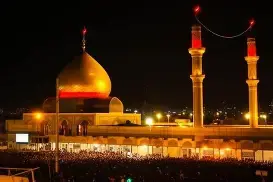
A Year of Peace Requires More Than a Prayer
To begin the Islamic year with greetings of peace is a beautiful tradition. But Muḥarram asks us to mean it — to understand that peace is not a gift that arrives without effort, not a condition that persists without vigilance, not a state that can coexist indefinitely with injustice. The lesson of Karbala is not that we should mourn the past, though mourning has its place. It is that we should examine the present with the same unflinching honesty that Ḥusayn brought to his own moment. He did not go to Karbala because he thought he would win. He went because he understood that there are things more important than winning — that a man who knows the truth and chooses silence to preserve his comfort has already lost something that no subsequent victory can restore. He went because the alternative — to watch injustice consecrate itself in the name of God, to lend his silence to that consecration — was, to him, a form of death more final than the sword. That is the standard Muḥarram sets. It is a high one. It does not ask every believer to seek martyrdom. It asks for something harder and more daily: the refusal to pretend that wrong is right, the willingness to say so when it matters, the moral courage to stand — even at cost — on the side of truth. May the new year bring peace. But may it first bring the wisdom to understand what peace requires, the honesty to see where it is being destroyed, and the courage to stand, as Ḥusayn stood, where conscience demands — even when the armies of the world are arrayed on the other side. The tragedy of Karbala is not only a memory. It is a mirror. And Muḥarram is not only the beginning of a year. It is an invitation — urgent, annual, and unanswered — to become worthy of the sacrifice it commemorates.


Bitter truth of our history. May we learn, reflect, and become the true promoters of peace.
A genuine article based on the Quranic call for justice, equality and peace.
You've written an outstanding synopsis, Dr. Abdullah. Your point about Yazid being an archetype is an apt one; surely, history made and re-made him, and his father, in multiple iterations. It too is a fact that the two men the father and son fought with a vengeance that rivalled no other - Ali and Hussain - humanity has managed neither to model nor replicate, ever again. Naila Moghul
An easy reading of a very complext historical event that has divided the Muslim world for centuries. I hope and pray we focus more on our struggle for justice than sectarian stancess.