When Faith Becomes a Campaign Weapon: Islamophobia and America’s Elections


The attacks on Dr. Abdul El-Sayed in Michigan’s Senate race raise a question larger than one candidacy: can a Muslim American seek public office without having to prove that his religion makes him neither dangerous nor disloyal? As the November 2026 elections approach, statements by Republican politicians and influential activists show how religious identity can become an electoral weapon. The consequences extend beyond Muslim voters to the meaning of equal citizenship.
El-Sayed has become a prominent target. The Associated Press reported that President Donald Trump called him a “jihadist” at an October 25 Michigan rally and questioned his loyalty. Republicans have also sought to associate him with the Muslim Brotherhood, although AP reported no evidence of his affiliation. Such accusations encourage voters to approach a Muslim candidate through suspicion before considering his qualifications. The language surrounding this campaign reveals a deliberate choice of emphasis. When Republican messaging described El-Sayed as a socialist, pro-Trump activist Laura Loomer urged a different attack: “Please call him a jihadist.” She added: “The word socialist has no meaning.” Her intervention illustrates an effort to make religiously charged suspicion more politically potent than an argument about economic ideology
Other statements reach beyond individual candidates. In an August post quoted by NPR, Representative Nancy Mace declared: “Every single Muslim holding public office in America is a Trojan horse, and a threat to both national security and our republic.” This is collective suspicion stated plainly: the alleged danger arises from being Muslim, regardless of an officeholder’s conduct or record. Representative Randy Fine similarly generalized about an entire community when he wrote in February: “If they force us to choose, the choice between dogs and Muslims is not a difficult one.” The remark followed an activist’s comments about dogs, but Fine’s response targeted Muslims broadly. Local reporting documented Sheriff Mike Chitwood’s subsequent withdrawal of his endorsement over Fine’s anti-Muslim posts.

Senator Tommy Tuberville supplied another striking example. In March, he juxtaposed photographs of the September 11 attacks and Mayor Zohran Mamdani hosting an iftar, declaring: “The enemy is inside the gates.” Placing a Muslim religious gathering alongside terrorism made the insinuation unmistakable. In a subsequent interview reproduced on his Senate website, Tuberville said: “If you preach or teach Sharia law, you need to go home. You don’t fit in the United States of America.” Anti-sharia rhetoric has also entered explicitly electoral settings. At September’s Republican midterm convention in Dallas, Senator Ted Cruz said, “Sharia law has no place in America.” KERA also quoted him describing Islam as something that “produces murder and oppression.” Representative Chip Roy’s October 2025 legislative announcement likewise called the spread of sharia an existential threat and proposed immigration exclusions and removals targeting its adherents. That proposal must be distinguished from enacted law.
These examples fit a broader pattern. A Rutgers University report examining more than thirty cases involving Muslim candidates and officials identified recurring accusations of Islamic takeover, gendered hostility, political violence, and presumed antisemitism. Its central warning is that hostility imposes exceptional costs on Muslim political participation, discouraging potential candidates without formally prohibiting them from running.
Christian Zionism is relevant to this political environment, but its role requires precision. Christians United for Israel describes itself as representing more than ten million members, while its Action Fund openly advocates Christian Zionist priorities to elected officials. This demonstrates organized influence around Israel policy. It does not establish that the organization directs Republican campaigns or coordinates the statements quoted here.
The democratic danger emerges when support for Israel becomes a test of American loyalty. Christian Zionists and other pro-Israel voters have every right to advocate their convictions. Muslim candidates equally have the right to challenge Israeli government policy without their faith becoming evidence against them. Neither “pro-Israel” nor “Christian” is a synonym for Islamophobic; responsibility belongs to identifiable speakers, organizations and actions.
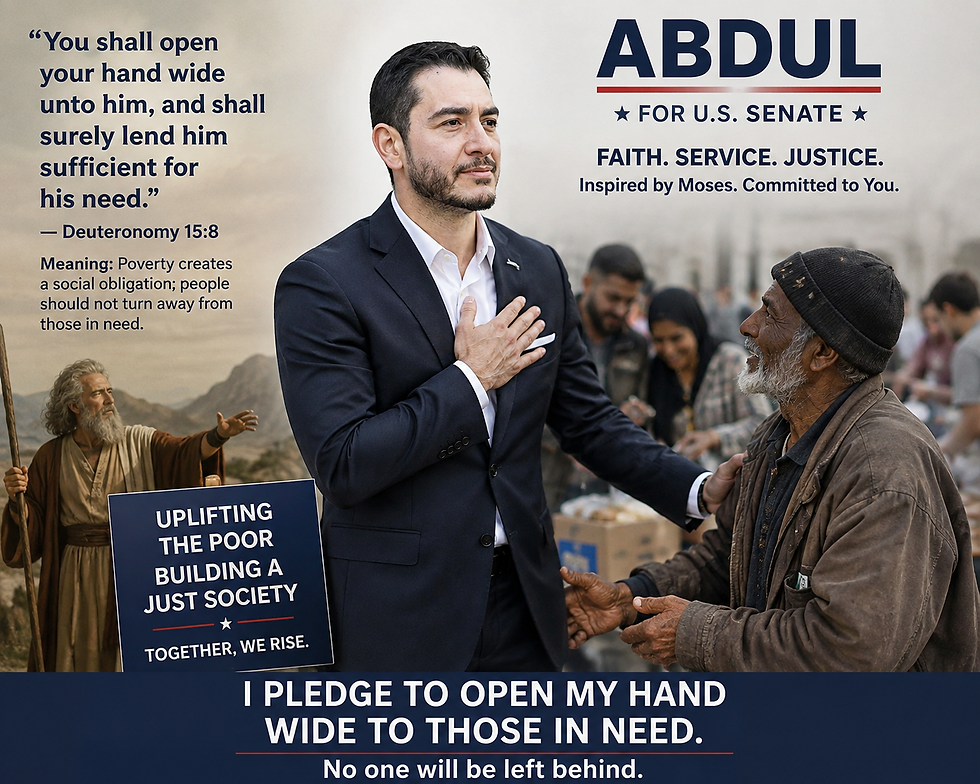
El-Sayed, meanwhile, deserves rigorous scrutiny of his statements, associations and policies. Criticism of his response to a synagogue attack, for which he apologized, is legitimate. Accountability becomes prejudice when evidence about conduct is replaced by assumptions about religion.
Electorally, such rhetoric can mobilize fear, divert attention from healthcare and living costs, and intimidate candidates and volunteers. It can also provoke resistance. Before voting concludes, its precise effect on votes or seats remains uncertain.
The standard should nevertheless be clear. Republicans must confront prejudice within their coalition, and Democrats must uphold the same principle within theirs. Muslim Americans should compete as citizens, not permanent suspects. The election tests who will govern—and whether Americans intend to keep the promise of equal citizenship.


Comments