Yassamin Ansari Challenges Power, Profit, and the Quiet Erosion of Trust

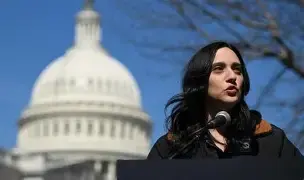
There are moments in public life when a single speech does more than fill the air of a legislative chamber—it reveals a deeper unease, a tension long felt but rarely articulated with clarity. The recent intervention by Yassamin Ansari belongs to such a moment. She is young by the standards of Washington, part of a generation that did not grow into power but arrived questioning it. Born to Iranian immigrant parents, shaped by the civic life of Phoenix, where she once served as vice mayor, Ansari represents Arizona’s 3rd Congressional District—a constituency that reflects both the diversity and the political certainty of an urban America that has already made up its mind about the direction it prefers. Her own rise was not without drama; she secured her place in Congress after a fiercely contested primary decided by a razor-thin margin, only to go on to win the general election comfortably in a district that rarely wavers in its loyalties. Yet what distinguishes her is not simply her electoral story, but the tone she brings—a refusal to accept that the way things have always been done must define the future.
Standing on the floor of the House, she turned her attention to Jared Kushner, a figure whose presence in American political life has always seemed to hover between the official and the informal, the public and the private. During the presidency of Donald Trump, Kushner occupied a role that defied easy categorization: not elected, not confirmed, yet entrusted with some of the most delicate responsibilities of statecraft, particularly in the Middle East. His involvement in negotiations, his proximity to power, and his relationships with regional leaders placed him at the center of decisions that extended far beyond Washington. Ansari’s concern, however, was not simply about the past. It was about what follows power—what happens after the doors of government close, when influence remains but accountability fades. Her remarks pointed to a question that Washington has long preferred to leave unanswered: when those who shape policy—or once did—engage in private financial relationships with the very regions and actors they once dealt with in an official capacity, where does public service end and private interest begin?
It is a question that has shadowed American governance for decades, surfacing in different forms across administrations, refusing to be resolved because it is woven into the very structure of power itself. The law, as it stands, offers only partial answers. Conflict-of-interest statutes apply while officials are in office, but once they leave, the boundaries blur. The Foreign Agents Registration Act requires disclosure under certain conditions, but enforcement has been uneven. Constitutional safeguards such as the Emoluments Clause are designed for those who hold office, not those who have just stepped away from it. What remains is a landscape where actions may be legally permissible yet ethically unsettling. And so the burden shifts—from courts to Congress, from law to politics.
In Washington, oversight is not an abstract principle; it is a function of power. Should Ansari’s party regain control of the House, committees will convene, subpoenas may be issued, and testimonies will be sought under oath. If not, the matter will likely recede into the background, replaced by other controversies, other urgencies. This is the rhythm of American politics: accountability pursued vigorously by one side, resisted or reframed by the other. Yet beneath this familiar choreography lies something more enduring. The debate that Ansari has touched is not about one individual, nor even about one administration. It is about a recurring pattern—a cycle that has repeated itself across time. From the scrutiny surrounding the Clinton Foundation and its donors, to questions about Dick Cheney and his ties to Halliburton, to more recent controversies involving political families and foreign business dealings, the same underlying concern persists. Power creates access; access creates opportunity; opportunity invites suspicion.

No system has yet found a way to break this chain entirely. What makes the present moment distinct is not the existence of the problem, but the language used to describe it. There is, in Ansari’s voice and in those of her contemporaries, a sharper edge, a greater impatience with ambiguity. Where earlier generations might have spoken in measured tones of “optics” and “perceptions,” there is now a willingness to frame the issue in moral terms—of fairness, of integrity, of trust. Trust, in the end, is what is at stake. Democratic systems do not rely solely on laws; they rely on belief—the belief that decisions are made in the public interest, that those entrusted with power do not use it for personal gain, that governance is something more than a negotiation of private advantage. Once that belief begins to erode, the consequences extend far beyond any single controversy. Cynicism takes root, participation declines, and the distance between citizens and institutions grows ever wider.
It is here that the legal and the political converge. The absence of clear legal violations does not resolve the ethical question; it intensifies it. For if the law permits actions that undermine public confidence, then it is the law—and the system it reflects—that must be reexamined. Reform proposals have circulated for years: extending cooling-off periods before former officials can engage in related business activities, mandating greater financial transparency, strengthening enforcement of disclosure requirements, and establishing independent oversight bodies insulated from partisan control. None of these measures is simple, and all face resistance from a political culture that is itself shaped by the very dynamics they seek to regulate. And yet the need for them persists.
Ansari’s speech, then, is less a conclusion than a beginning. It does not settle the debate; it reopens it. It does not prove wrongdoing; it demands scrutiny. It does not offer solutions; it forces the recognition that solutions are needed. In the corridors of Washington, such moments often pass quickly, absorbed into the constant churn of political life. But occasionally, they linger, echoing beyond the chamber in which they were first spoken, prompting a wider audience to confront uncomfortable questions. What should be the limits of power once it leaves office? What obligations follow those who have shaped public policy? And how can a democracy ensure that influence, once granted, is not quietly converted into private gain? These are not questions that can be answered by a single investigation, a single election, or a single generation of leaders. They are questions that must be asked repeatedly, precisely because they resist final resolution. And perhaps that is their purpose—not to be settled once and for all, but to remind a society, again and again, of the fragile boundary between public service and private interest, and of the vigilance required to keep that boundary intact.


Fresh and powerful voice.
Fresh and powerful voice.