The River of Giving: Charity Across Faiths and Worldviews
- Aslam Abdullah
- Feb 22
- 4 min read


In the United States alone, there are more than 1.5 million registered nonprofit organizations. Americans give over $500 billion annually to charitable causes—through churches, mosques, synagogues, temples, foundations, universities, hospitals, disaster relief agencies, and community initiatives. Worldwide, conservative estimates place annual charitable giving well above $1.5 to $2 trillion when religious donations, state-supported aid, philanthropic foundations, remittances, and humanitarian contributions are included. And yet hunger persists. Nearly 700 million people face chronic food insecurity. More than 2 billion people lack reliable access to safe drinking water. The paradox is not scarcity of generosity—it is fragmentation of effort.
What if the river of giving, already vast, were channeled with moral clarity and global coordination? What if religious charity, secular philanthropy, and grassroots generosity were pooled and directed systematically toward eradicating hunger and thirst? The resources exist. The moral will exists. The question is organization. To understand this possibility, we must first examine how the world’s great religious and moral traditions conceptualize giving—whether obligatory or voluntary, measured or spontaneous, annual or situational, and who is entitled to receive.
Islam: Charity as Structured Justice

Islam distinguishes between obligatory and voluntary charity. Zakāt is not mere generosity; it is redistribution ordained as a pillar of faith: “Establish prayer and give zakāt.” (Qur’an 2:110) The standard rate is 2.5% of accumulated wealth above a minimum threshold, assessed annually. Its recipients are precisely defined: “Alms are for the poor and the needy… for freeing captives… for those in debt… and for the traveler.” (Qur’an 9:60) Beyond zakāt lies ṣadaqah—voluntary charity, encouraged without limit. In Islam, giving purifies wealth, protects society, and institutionalizes compassion. It is annual in structure but continuous in spirit.
Christianity: Charity as Love in Action
In the Hebrew Bible, tithing required 10 percent: “Bring the whole tithe into the storehouse.” (Malachi 3:10) The New Testament reframes giving through inward intention: “Each one must give as he has decided in his heart… for God loves a cheerful giver.” (2 Corinthians 9:7) Jesus expands the moral horizon: “Whatever you did for one of the least of these… you did for me.” (Matthew 25:40) Christian giving is often regular—weekly offerings, annual pledges—yet fundamentally voluntary. Its recipients include widows, orphans, the poor, and the marginalized.
Judaism: Charity as Justice
In Judaism, charity (tzedakah) literally means righteousness or justice: “You shall surely open your hand to your brother, to your needy.” (Deuteronomy 15:11) Traditionally, 10% is given, with some giving up to 20%. Maimonides described eight ascending levels of charity, the highest being empowering self-sufficiency. Giving is ongoing and obligatory, woven into covenantal responsibility.

Hinduism: Charity as Sacred Duty
Dāna, or giving, is central to dharma: “The gift which is given… to one who does nothing in return… is considered to be in the mode of goodness.” (Bhagavad Gita 17:20) No universal percentage exists. Giving often accompanies festivals, life rites, pilgrimages, and temple offerings. It may support priests, students, pilgrims, or the poor. Charity purifies karma and sustains social harmony.
Buddhism: Charity as Liberation from Attachment
In Buddhism, dāna is the first perfection: “If beings knew… the results of giving and sharing, they would not eat without having given.” (Itivuttaka 26) There is no mandated percentage. Giving is voluntary, ongoing, directed toward monks, community members, and the needy. It dissolves ego and cultivates compassion.
Sikhism: Sharing as Spiritual Integrity
Sikh teaching mandates dasvandh, giving 10%: “He alone knows the Way, who earns honestly and shares with others.” (Guru Granth Sahib 1245) Through langar (community kitchens), no one is left hungry. Giving is regular, structured, and deeply communal.
Jainism: Compassion Toward All Life
Jain ethics, rooted in nonviolence (ahimsa), encourage support for monks and care for all living beings: “One should give food and drink, clothes, and shelter.” (Tattvartha Sutra) Charity is voluntary yet morally binding, often continuous.
Bahá’í Faith: Generosity Without Compulsion

“To give and to be generous are attributes of Mine.” (Hidden Words) Contributions are voluntary and confidential, directed toward community institutions and humanitarian aims.
Indigenous Traditions: Redistribution as Communal Balance
Many Indigenous cultures practice ceremonial redistribution. In the potlatch ceremonies of the Pacific Northwest, wealth was given away to maintain communal equilibrium. Giving affirmed belonging, not superiority.
Naturalists, Secularists, and Atheists: Charity Without Theology
Modern secular philanthropy rivals religious giving in scale. Humanism declares: “We affirm our responsibility to make the world a better place.” (Humanist Manifesto III) Philosopher Peter Singer argues that if one can prevent suffering without comparable sacrifice, one is morally obligated to do so. Secular giving is voluntary, often strategic, data-driven, and global.
Differences Across Traditions
Obligation:
Structured obligation: Islam, Judaism, Sikhism.
Strong moral expectation but voluntary: Christianity, Hinduism, Buddhism.
Entirely voluntary: Bahá’í.
Ethical rather than divine obligation: Secular humanism.
Percentage:
2.5% annually (Islam).
10% traditionally (Judaism, Sikhism, historic Christianity).
No fixed amount (Hinduism, Buddhism, Jainism).
Variable and campaign-based (secular).
Recipients:
The poor and vulnerable are universally emphasized.
Religious institutions are supported in some traditions.
Universal humanitarian focus in secular ethics.
Timing:
Annual calculation (Islamic zakāt).
Regular or weekly offerings (Christianity).
Festival-based (Hinduism).
Continuous practice (Buddhism, Jainism).
Strategic campaigns (secular philanthropy).
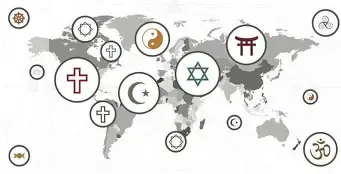
5. Commonalities
o Despite theological diversity, several themes unite all traditions:
o • The poor have moral priority.• Wealth carries responsibility.• Giving refines the giver.• Charity strengthens community.• Compassion transcends tribe.
No tradition glorifies hoarding. All warn against indifference.
A World Without Hunger?
The world produces enough food to feed every human being. The obstacle is not production; it is distribution. When Americans alone give more than $500 billion annually, when global giving exceeds $1.5 trillion, the moral arithmetic becomes unavoidable. If even a fraction of global charitable flows were coordinated—across religious institutions, secular foundations, and governments—directed systematically toward clean water systems, sustainable agriculture, and local food infrastructure, chronic hunger could be dramatically reduced within a generation. Faith communities possess networks, moral motivation, and regular revenue streams. Secular institutions possess analytics, logistics, and scaling mechanisms. Together they form a latent global treasury of compassion. The river already flows. What is needed is a shared reservoir and a just irrigation system.
From Fragmented Generosity to Organized Mercy
Charity, whether commanded by revelation or inspired by human conscience, testifies to a universal truth: we are responsible for one another. If religions and secular moral communities move from isolated giving toward cooperative strategy—without erasing their differences but recognizing their common aim—the eradication of hunger and thirst need not remain an aspiration. It can become a project. The world does not lack generosity. It lacks coordination. The means are in our hands. The question is whether we will act together.


Comments